
Pricing Your Home Accurately
When selling your home, pricing is one of the most important aspects to consider. You do not want to price it too low and give the home away, leaving money on the table. On the other hand, you want to be very careful not to price it too high, as it can negatively affect the final price you get for the home.
As local, experienced realtors, we can prepare a detailed analysis to compare property values in your neighborhood and help you determine the right price range. First, you'll decide on the price you think your home will realistically sell for, and then, based on market factors and trends, you'll determine where you should set your list price.
Buyers who view your home are highly knowledgeable in today's real estate market. When searching for a property, they often compare options extensively, with a primary focus on price. Thanks to the ease of accessing information online, buyers are now well-informed about market activity and pricing trends. It is crucial to determine a realistic and accurate market value for your home. You want to set a price high enough to ensure you get the best return, yet still attractive compared to similar homes.
What Affects Your Home’s Market Value?
Physical Characteristics
Your home’s location, size, lot dimensions, architectural style, floor plan, age, amenities, and condition greatly influence its value.
Market Conditions
Other factors also directly affect your home's value, including current mortgage interest rates, national and regional economic trends, buyer demand, seasonal fluctuations, availability of competing properties, and prices of recently sold homes.
Using a Comparative Market Analysis as a Guide
A Comparative Market Analysis (CMA) is the most effective tool we use to estimate your home's potential selling price. As a member of the Park City Board of REALTORS®, with access to the Multiple Listing Service, we have data on sold prices for all properties sold in our market. Utah is a non-disclosure state, so this information isn't readily available to the public. Using this valuable data, we can create a report comparing similar homes in your area. This will help you set a price that is both appealing and realistic for your home.
A Comparative Market Analysis highlights similar homes in your area that are:
- Active Listings - Homes currently competing with yours for buyers' attention. We can see what comparable asking prices are, but remember, these homes have not yet received an acceptable offer.
- Under Contract - Homes that have received and accepted an offer give a good indication of realistic pricing and market activity.
- Sold - Looking at the prices paid for recently sold homes provides the best foundation in determining your home's most accurate market value. Once adjustments are made for square footage and features, we can make a qualified recommendation for the asking price of your home.
- Expired - Homes that have gone through the duration of a listing period, but failed to sell. Many factors could be responsible, such as a lack of marketing or the home’s condition, but most often it is simply because the home was priced too high.
A Buyer Will Not Pay More Than They Need To
It’s pretty simple: a buyer isn’t going to pay more than they need to when buying a home. They’ve been watching the market closely and checking out all the listings. They know better than anyone what’s available and at what price. If your price is within your market range, buyers will come to see your home. But if it's priced too high, they'll probably skip it. Your high price will make your competition look good and will help sell their homes, not yours. Do you want to sell your home or help sell your neighbor’s home?
The Excitement of a “New On Market” Listing
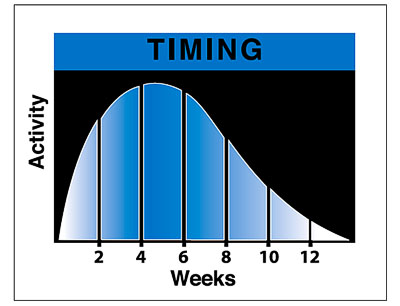
When selling your home, time is not on your side. When a new home is listed for sale, we market it aggressively to other agents and potential buyers. In today's world, all agents and most buyers have created saved searches on multiple real estate platforms, so when a new property comes on the market within their search parameters, they'll be notified immediately. Because the entire potential buyer market will see your home in the first couple of days of its launch, inquiries and showings usually occur during the first week or two, peaking at around 2-3 weeks. After about 30 days, the activity typically drops quickly. Your home starts to appear "old” and “stale” to agents and buyers. This prolongs the time your home is on the market, and causes us to lose our initial momentum. If your home is overpriced, you may miss opportunities to show to active buyers, or the showings that do occur might not lead to an offer. Ultimately, your home could sell below market value because it has been on the market too long.
The Risks of Pricing Too High
If you price your home at “Fair Market Value,” you will see good activity and strong buyer interest. The higher you go above Fair Market Value to “Test the Market,” the fewer showings you will have. An asking price that exceeds the market range can hurt a property's marketing. Some believe that pricing below Fair Market Value aggressively can increase showings and possibly lead to multiple offers as buyers try to outbid each other — we don't usually recommend that approach because it has some risk, but we're happy to discuss if you're interested.
The Problem with “Testing the Market”
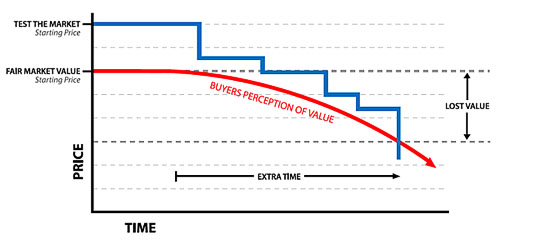
If you take anything away from this website, this chart above is the most important information we can share.
A common mistake sellers make is pricing their home high at the beginning to “test the market.” The thought is, “we can always lower the price if we don’t receive any offers,” or “we need to build in a cushion for negotiation.” Unfortunately, most of the showing activity occurs when the home is first listed. Once the initial pool of buyers has seen your home and it doesn’t sell, you will then have to wait for new buyers to enter the market, and you may have to reduce your price to stay competitive.
Also, the longer your home remains on the market, the less interest it will generate among buyers. Buyers typically feel that they should pay less for a home the longer it has been on the market. At that point, you face the real possibility of being forced to sell it for less than if you had priced it at a true market value. It’s especially important to make sure your home is priced correctly when conditions favor a buyer’s market. In that scenario, buyers are very sensitive to price and will look harder to find homes that offer the most value.
Buyers typically do not present offers on high-priced properties; they may even skip seeing them altogether. They are watching closely and waiting for good properties, priced correctly, to come onto the market.
Current Housing Inventory - “The Pond”
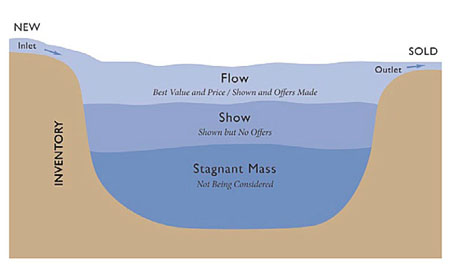
When a new listing hits the market, there is usually an initial surge of interest and showings during the first week or two. This is the “pent-up demand” from buyers who have already considered and passed on other available properties. If your listing price is close to its estimated market value, buyers will recognize this, and those interested will respond with stronger offers for a new listing. A properly priced home prompts a genuine buyer to ask, “What will it take for me to get this house?” Conversely, an over-priced listing will sit on the market for weeks and even months as buyers wait for your price to come down. All the while, as the days-on-market counter ticks on, buyers start asking the question, “What’s wrong with that house?”
Why Your First Offer is Often Your Best Offer
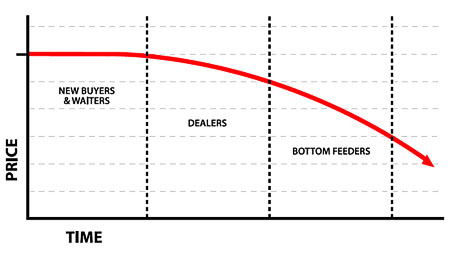
Another common mistake sellers make is ignoring the first offer they receive. Often, if they get an offer quickly, they become overconfident and think they can do better by waiting for another buyer. However, that's rarely the case. When you first list your home for sale, new buyers and those waiting for the right fit will come to see it. If it's priced at fair market value, you might receive a good offer right away. Over time, as you end up lowering your price, you'll attract the deal-makers. Eventually, with more price reductions and time, you'll attract the bottom feeders. Who would you prefer to sell your home to?
The “Selling Equation”
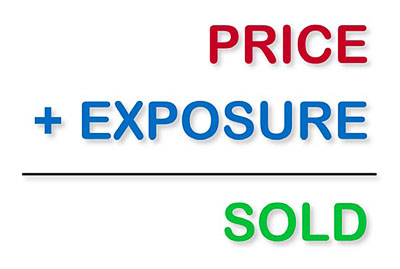
It's really quite a simple equation. Price + Exposure = Your Home Sold. You must first start with the correct, accurate pricing for your home. Once we have the home priced right, we will heavily market it to potential buyers and other Realtors in the area. We have established many avenues and resources to market your home, but if it is overpriced, all of our extensive efforts will go to waste. Now that you understand how important it is to set an accurate price for your property, preview our Marketing Your Home page to learn more about our extensive property marketing plan.